Category Archives: Transformation

Time to breathe …

Standard

IMAG0799

I get to breathe again …

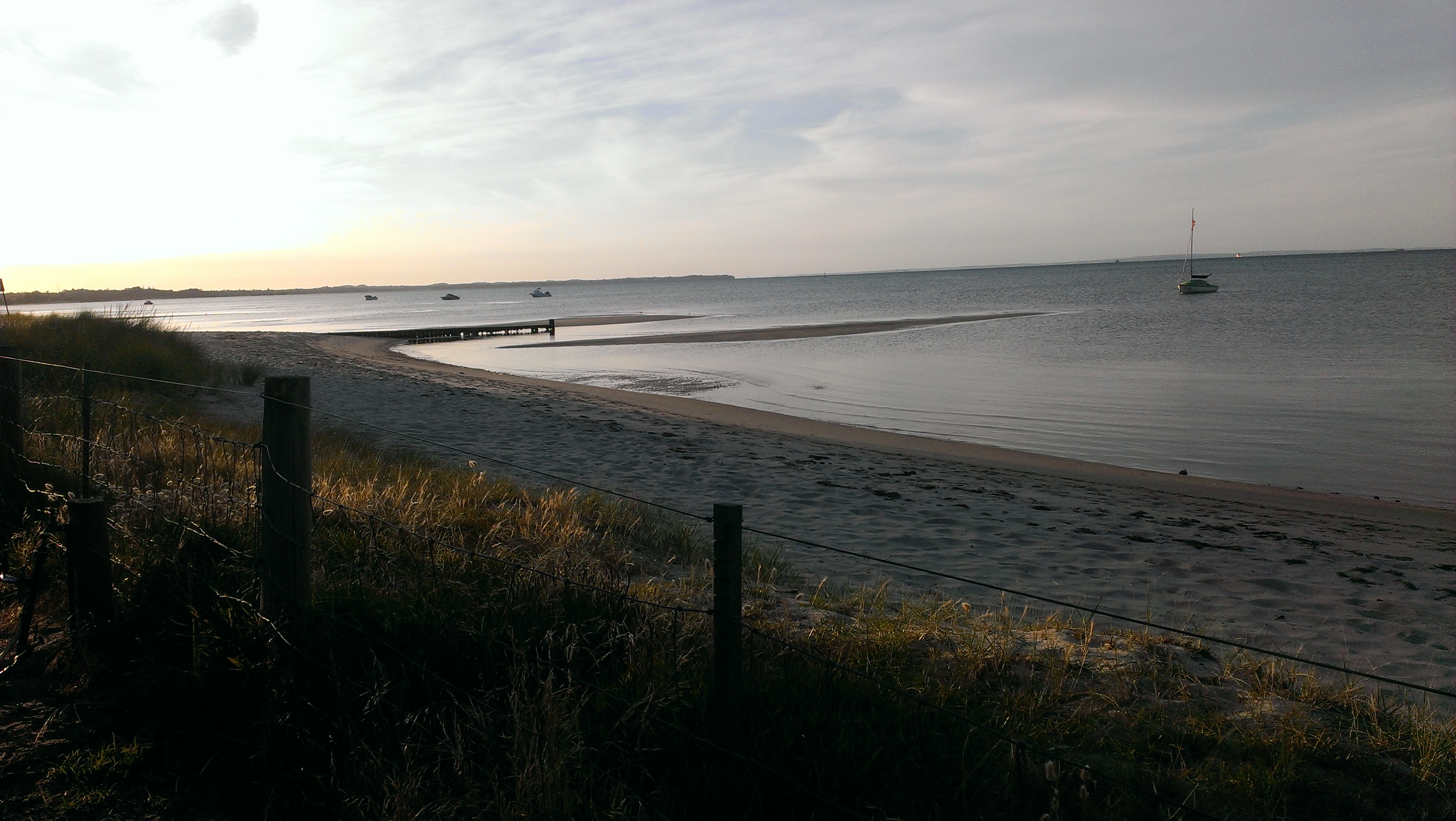
My favourite time of the year, when the crazy treadmill of working to foster transformative learning spaces within the business-focussed world of education ceases to exist. The government funding and subsequent organisational delivery constraints, student issues and tremendous achievements, ongoing stresses and chaos fade into the background, and I get to sink into the glorious delights of living beachside on the Mornington Peninsula with my beautiful boys.

Only a month ago, my first-born joined in marriage with his gorgeous wife, and they now step into the next stage of their lives together. There could be no better opportunity for them to consolidate their commitment to each other than coming here to the beach, where a bath in the sea greets each day before breakfast, new adventures are planned daily and implemented with joyful fun and celebration, and deeply philosophical conversations about life and living are had across generations of diverse souls. What an incredible space to reflect on the way forward.

As my first day in paradise closes, this eve before Christmas, the day before my family and friends come to join me, I look across Port Philip Bay to Mount Martha, and the houses on the hill are reflecting the setting sun. They look like mirrors in a mosaic, twinkling farewell to the sun as it departs for the day. Gulls are sitting quietly on the sandbanks exposed by the receding tide, only occasionally disturbed by one in their community puffing their chest and squawking for full attention. The Spirit of Tasmania steams out of the Heads, taking many to loved ones across the seas of Bass Straight.

I am humbled and deeply appreciative of the time I am able to spend here in our simple seaside holiday, when so many across our world are struggling just to survive in the midst of oppressive environments and circumstances. This holiday promises much, with the space it provides to relax and breathe into myself, to lay out the complexities and possibilities that have accumulated throughout the year now gone, and to find the truth and authenticity that will nurture and guide the year ahead.

As we each step into the celebrations across cultures that this year brings, may I send you my blessings for a time of reflection and regeneration, both for yourself and for your family. May this time provide you with the space to breathe and step into life mindfully and may you be blessed with time to touch and heed the voice of your soul as it whispers its truths to you.

In love and light,

Jenni

Space to breathe and contemplate life

Standard

I’m back from a few days on the Gold Coast after presenting a paper at an education research conference and have been reflecting on my leisurely and rambling rumination whilst there …

Sitting in the cool lobby of a hotel I had the pleasure of inhabiting for the four days of my stay, I was waiting for my shuttle to the airport. I had just walked along the magnificent Queensland coast where Surfers Paradise meets the sea, and had surrendered myself to the gently rolling ocean waves.

I’m not a great fan of the area and it’s high tourist trade, but was incredibly grateful for the opportunity I’d had to engage in deeply stimulating dialogue with an international community of my peers, and to sit in my 19th floor room overlooking the panoramic vista. The setting of our research gathering amongst the proliferation of high-rise apartments of Surfers Paradise saw us bordered by the endless coast on one side and Tamborine Mountain beyond the Hinterland on the other.

It reminded me of a beautiful book I bought for my boys years ago. Where the Forest Meets the Sea by Jeannie Baker (1987) is described as a tribute to her love of Australian wilderness and fierce commitment to protecting it from destruction http://www.jeanniebaker.com/wtfms.mov Also http://www.vintagechildrensbooksmykidloves.com/2009/07/where-forest-meets-sea-guest-post-by.html. It is a book created from original artworks that depict the unfolding story of change through the imaginings of a young boy, telling the story of a place further north where the incredible Daintree Forest meets the sea. It predicts how this space where the elements and forces of nature come together might be irrevocably changed to accommodate our desire to appreciate and access such places of beauty. I remember that I took my boys into the Melbourne Art Gallery at a time when they were young and dreaming their own dreams of possibility, and we were privileged to see the original artworks for the book.

The television is playing in the background in the lobby, and from a distant place I can hear The Last Post sounding. Young men and women walking along the street in front of me are wearing war medals, returning from a local ANZAC Day march, and I am taken in my mind to scenes of heart-wrenching death as beautiful young lives are lost on the sandy shores of Gallipoli. Another coast, another place where the rich landscape meets the sea. Another place where the elements and forces of nature have been witness to and changed by the desires and ambitions of ‘progress’ and ‘protecting’ and promoting what is ours.

In the odd news reports that drift across from the television I hear about plans to purchase massive instruments of war that will cost billions of dollars and contribute to a culture of alienation and intimidation, and I consider how all these stories collide.

I am ruled by a government, overseeing a population, overwhelmingly out of touch with the key issues we are facing. Even as I sit in my air-conditioned lobby, having enjoyed the sights from my eagles nest perspective, waiting to board my fume-belching plane back home, I am overwhelmed by the impact of our decisions. Decisions to bulldoze protected forests; dump oil in unique marine environments; cull exquisite sharks in their homes; refuse critical assistance to people and creatures who need it most. Decisions to buy exorbitantly priced instruments of war and protect our borders from those we fear who come across the sea to share what belongs to all of us, and send them away to be imprisoned for being ‘illegal’. Decisions to support the clearing of more irreplaceable ‘spaces’ and re’place’ them with concrete jungles filled with constantly revolving editions of ever-new technology, and retire on massive tax-payer funded pensions … but we will tell those in dire peril we have no money to support them in their need.

And I wonder what we can do to change it.

In the lobby people are coming and going, some excited to be launching into their holiday adventures, others like me preparing to reenter the ongoing story of their lives. Two young sisters are using the couches as mountain ranges, climbing and navigating their way through imagined adventures.

From all corners of the world, people are going about their business, while in so many places, where the landscapes meet the sea, where mountains overlook winding rivers, where forests embrace their rich environments, the planet and her dependent inhabitants are struggling to survive due to the heartless, thoughtless, senseless decisions and actions being taken now. It is my observation that in most cases assaults on living creatures and our planet stem from our inability to open our hearts and make choices grounded in loving wisdom. Greed, fear and suspicion do not create sustainable solutions. Answers will never be found in instruments of war. Loving compassionate hearts, working collaboratively and open to each others’s truths, are the only foundation on which humane, sustainable decisions can be made for our collective future. A government working secretly at times, blindly at others in a seeming time warp is not sustainable for people, planet or anyone’s profit.

So what to do … I seem to recall a song from my childhood about shining a light in my little corner of the world … that if we all shine our light in our little corner we can illuminate the world. I guess this means we need to polish up our strengths, open our hearts and step out to use our loving influence and our compassionate example in all instances. Share whatever we can, grow whatever hope and capability is possible in our little space so that we can heal and prosper collectively … as one interconnected organism.

Now that I am home from my sojourn, I need to figure out what that next step will be for me … might just go and polish my heart and my courage while I give it some thought …
The secret to a good life

Standard

According to Scott-Peck in ‘The road less travelled’ (1979), education comes from the word ‘educare’, meaning to ‘bring out from within’ or to ‘lead forth’. The art of teaching then, much like Socrates’ allusion to teachers as mid-wives (Plato’s Theaetetus), might be seen as concerned with drawing out what is already contained within the learner, bringing it into their conscious awareness.

In my experience, rather than trying to shovel information into people, the practice of learning and teaching should always be learner-focussed, most often achieved through facilitating a social ‘space’ where learners are given permission to go on a quest – an adventure of personal discovery into the self.

This space of learning can transpire through a social, collaborative process where individuals share and critique their own assumptions, experiences and perspectives of personal learning and knowing. Through this often disorienting quest to uncover/discover/rediscover the truths and strengths that lie within, individuals can begin to find new ways of seeing themselves and the world around them, and begin to consider the rich opportunities they have to engage with and impact on this newly perceived world. For me, mine is a process of supporting the ‘restorying’ of learners’ perspectives on what they see as possible for them in life. As an ‘educator’ of adults returning to study, I find the greatest satisfaction in supporting these transformations of self and potential.

Today, as I’ve been continuing my own PhD learning quest, pursuing a greater understanding of how we can best support teachers in their own transformative journeys of learning, I have come across an article from the Gallup Blog, the company that provides us with a myriad of statistics on all manner of fascinating stuff. The article is entitled ‘Teaching may be the secret to a good life, and in it, Brandon Busteed, Executive (Director of Gallup Education) and Dr. Shane Lopez (Gallup Senior Scientist) discuss their findings about the satisfaction rates of teachers in America.

Even while identifying the second highest levels of stress of all fourteen vocational areas surveyed, teachers rate the second highest level against emotional health and wellbeing. Though not perceived as a vocation pursued for financial gain, teachers surveyed responded that they get to “use their strengths and do what they do best every day”, and are most likely to report experiencing happiness and enjoyment (Busteed and Lopez, 2013).

This leads Busteed and Lopez to propose that as the title suggests, a career of teaching may well be the secret to a good life. They reflect on the benefits of working in such a richly rewarding vocation, and consider the value of great teachers in our lives … those who have inspired and encouraged us in pursuit of our sometimes lofty dreams, urging us to reach ever higher as the experience of life crafts us into the truest expression of ourselves.

I am not alone in knowing that the value of great teachers is true in many contexts. Those who have had the privilege and challenge of raising children and those who mentor, coach and lead with gentle strength each day in their work, sport and recreational lives may well have inspired and experienced the same richly rewarding outcomes.

So thank you to the educators in all contexts who continue to inspire and encourage us on our journey to the fullest expression of ourselves. May they realise the grandest of lives.


Busteed, B & Lopez, S. (2013) Teaching may well be the secret to a good life.  The Gallup Blog. http://thegallupblog.gallup.com/2013/03/teaching-may-be-secret-to-good-life.html

Peck, S. M. (1978). The road less travelled. New York: Touchstone.

Plato (circa 257 BC). Theaetetus Translated by Cornford, F. M. (1930) pp148e-151d. http://www.phy.ilstu.edu/pte/310content/philosophy/midwife.html